
Trending
Raksha Bandhan 2026: The Most Beautiful AI Prompts for Capturing Every Sibling Moment
Raksha Bandhan is one of the most emotionally rich festivals in India — and this year, creators, designers, and families are using AI image prompts to bring those precious sibling moments to life like never before. Here's everything you need to know, scene by scene.
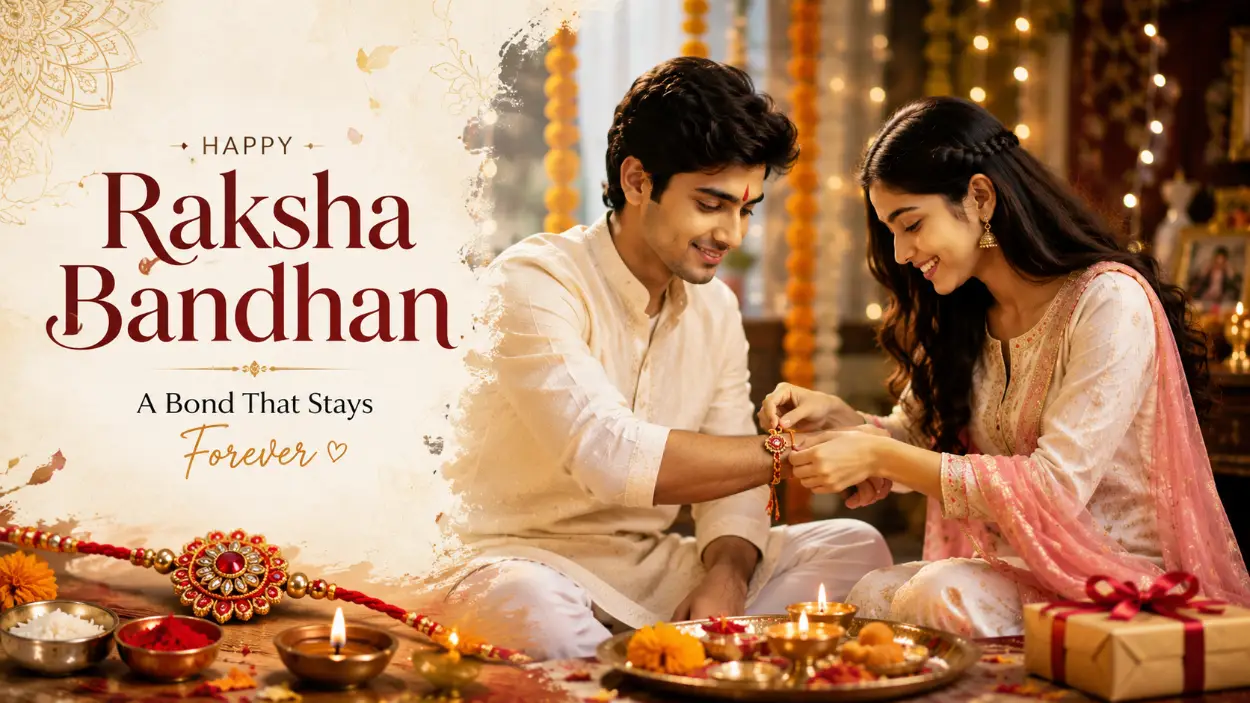
Raksha Bandhan hits differently when you're 23 and still remember the year your sister spent three days making you a handmade rakhi from craft paper and gold thread. She didn't buy it. She made it at 11 PM the night before because she wanted it to mean something.
That's what this festival actually is. Not the discount sales. Not the gifting guides. It's that specific, unrepeatable moment — the smell of marigolds, the warmth of a diya glowing across someone's face, the way your wrist feels after a thread gets tied around it for the first time that season.
I've been writing prompts since I was 23. That's years of figuring out exactly which words make an AI model feel something rather than just render it. Raksha Bandhan gave me some of the hardest creative problems I've ever tried to solve — because sibling love isn't a pose. It's messy, it's real, and it's terrifyingly specific to each family.
This post is everything I learned across three months of prompt-writing for this one festival.
What Is Raksha Bandhan — And Why It's So Hard to Capture Visually
Raksha Bandhan is observed on the full moon day (Purnima) of the Hindu lunar month of Shravana, which typically falls in July or August. In 2026, it falls on August 9th. But dates matter less than what the festival actually means.
The word itself breaks down simply: Raksha (protection) + Bandhan (bond). A sister ties a rakhi — a sacred thread — around her brother's wrist. He promises to protect her. She gives him sweets. He gives her a gift. Simple on the surface.
But when you watch it happen in a real home — not a greeting card shoot — you realize how layered it is:
A sister who lives in another city flying back just for this one morning
A brother who doesn't show emotion, going absolutely quiet when she ties the thread
Old childhood photographs accidentally discovered while searching for the thali
The specific laugh that only siblings know how to pull out of each other
This is what AI prompts need to capture. Not a scene. A feeling with a scene around it.
Why Raksha Bandhan Is Trending in AI Image Generation Right Now
The festival has always been photographed — but something shifted in the last year or two. People no longer just want documentary photos. They want images that look like cinematic memories. They want the kind of image that, if you saw it on your phone camera roll three years from now, would make you stop scrolling.
That's exactly what the prompts on Promzio are built to do.
There are three main reasons creators are searching for Raksha Bandhan prompts right now:
1. Content creators need authentic Indian festive imagery — not stock photos that look like they were shot in a studio in 1997 with the same two models. Brands, social media managers, and independent creators need real-looking visuals that connect emotionally with Indian audiences.
2. Families want to create personalized festive content — people are using AI-generated images as inspirational references for their own photoshoots, or even using them directly on social media with appropriate context.
3. Designers and marketers need campaign-ready assets — from e-commerce brands to regional startups, the demand for high-quality, culturally specific Raksha Bandhan imagery spikes every July-August.
The 10 Raksha Bandhan Moments That Actually Matter
After three months of prompt writing and deep testing, I identified the exact moments that carry the most emotional weight during Raksha Bandhan. These aren't random shots — each one is a real emotional beat from a real family celebration. Every prompt linked below was written by hand, tested, and refined specifically for this festival.
1. The Festive Home Setting — Where It All Begins
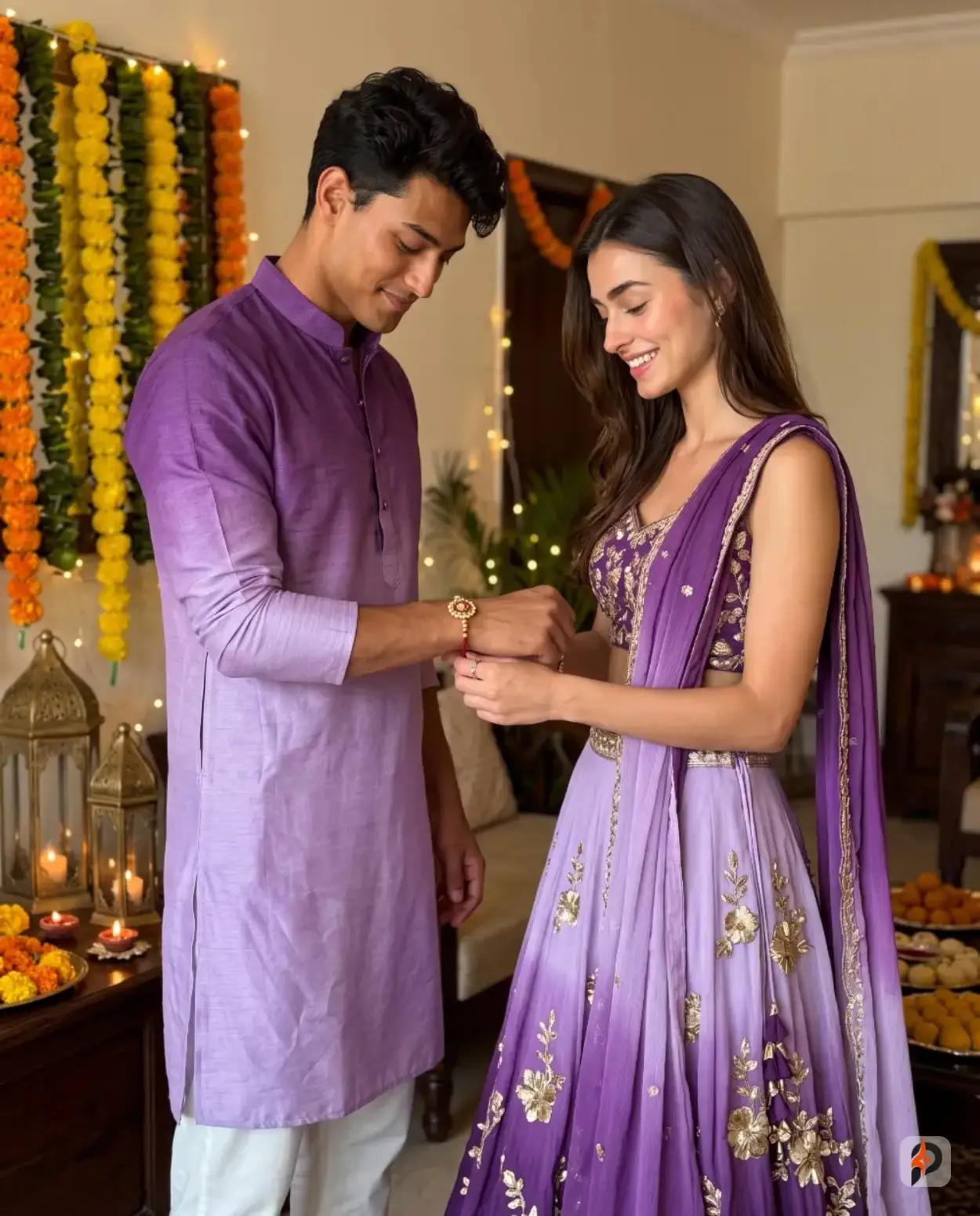
The physical space of Raksha Bandhan is just as important as the people in it. Marigold garlands. Brass lanterns. The warm orange glow of diyas against decorated walls.
This first moment — brother and sister together in a beautifully decorated home interior, the rakhi just being tied — is the establishing shot of the whole festival. It's the image that says this is Raksha Bandhan before anyone says a word.
👉 Indian Brother and Sister Celebrating Raksha Bandhan in Festive Home Interior
This prompt was designed to capture the purple-and-gold palette that feels both modern and deeply rooted in Indian festive tradition. The ambient lighting from diyas, fairy lights, and brass lanterns creates a warmth that no studio setup can replicate. The key challenge here was preventing the background from overwhelming the subjects — which is why the spatial separation and defocused décor were built directly into the prompt structure.
2. The Selfie — Siblings in the Wild
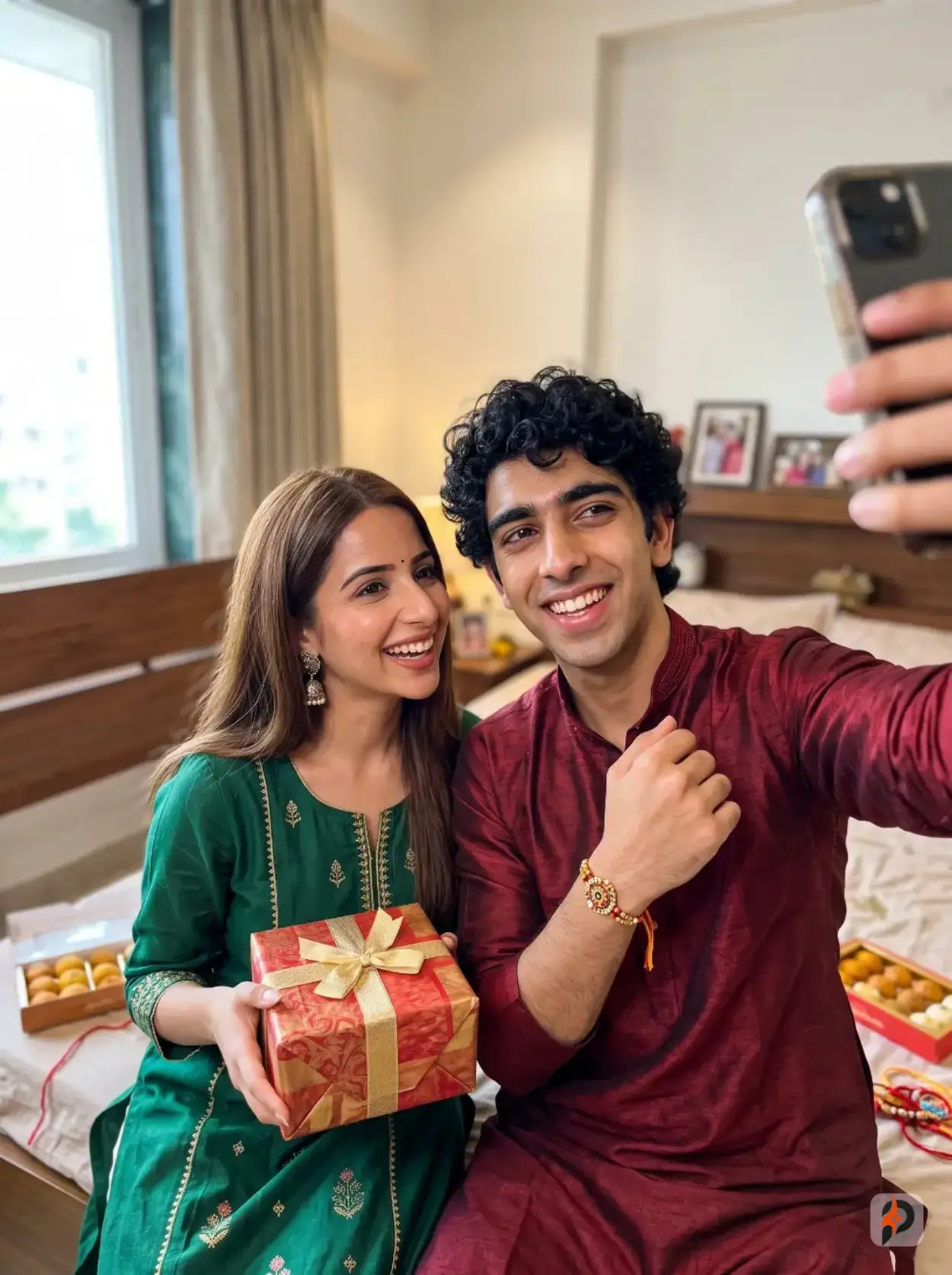
Anyone who has actually celebrated Raksha Bandhan knows that at some point, someone grabs a phone and insists on a selfie. It's chaotic. One person is laughing. The other is holding a gift. The rakhi is visible on the wrist. The lighting is whatever the bedroom window happens to offer.
This is the most honest Raksha Bandhan photo.
👉 Indian Brother and Sister Celebrating Raksha Bandhan Smartphone Selfie Photo
The maroon kurta and green kurti combination was deliberate — these are classic Raksha Bandhan color pairings. The selfie perspective (front-facing wide-angle, slightly above eye level, handheld and imperfectly framed) is what makes this feel real rather than produced. It's a technically difficult prompt to write because authentic spontaneity is hard to engineer — but the result looks like a photo you'd actually find in a family group chat.
3. The Tilak Ceremony — The Part Most People Forget
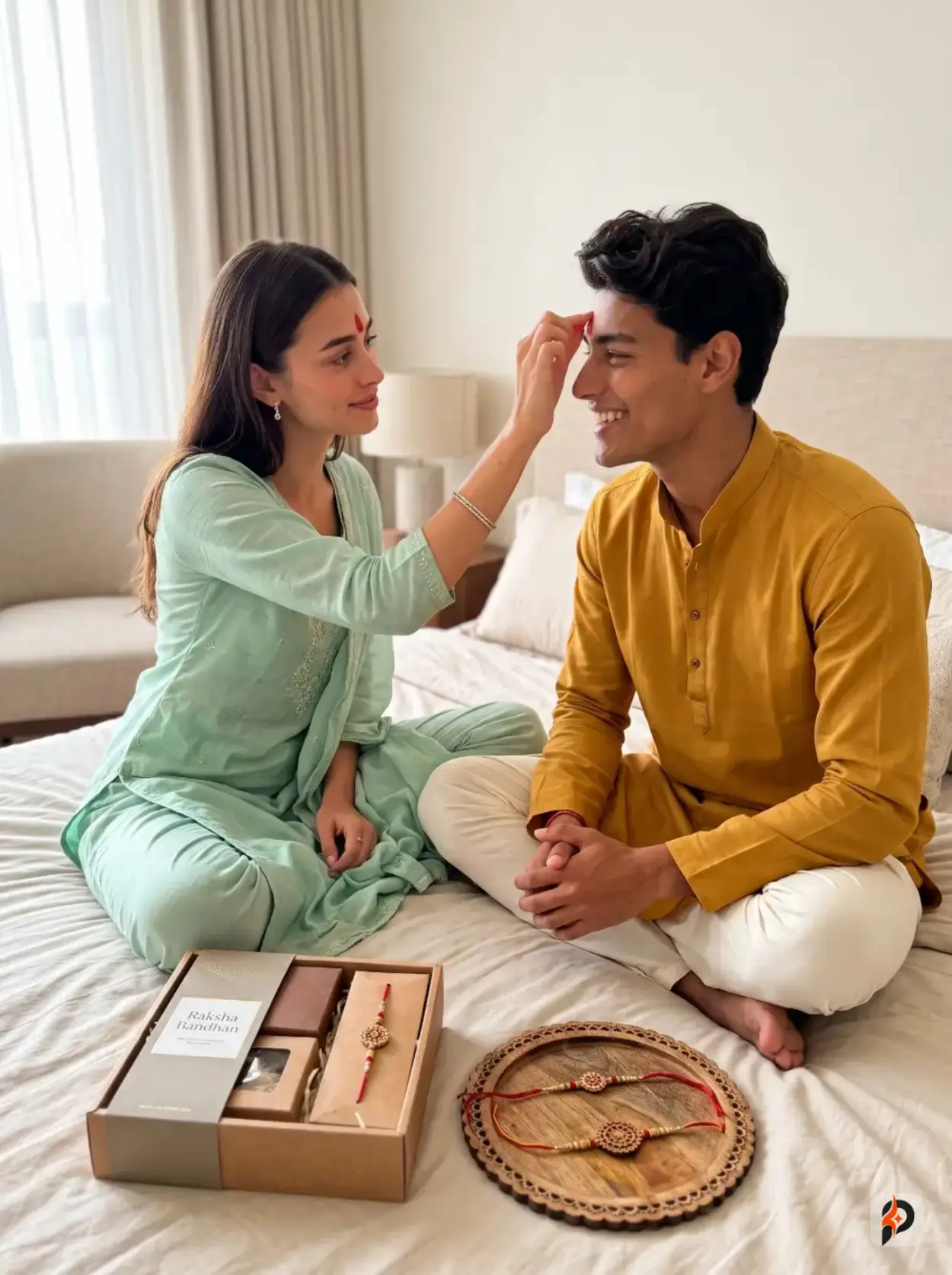
Before the rakhi gets tied, there's often a tilak — the sister applies a red mark on the brother's forehead as a blessing. This is one of the most visually striking moments of the ceremony, but it's also one of the least photographed, because it happens quickly and people are busy with the ritual itself.
I specifically wanted to document this moment because it's the one that gets overlooked.
👉 Indian Siblings Celebrating Raksha Bandhan Ceremony in Minimalist Bedroom Setting
The minimalist bedroom setting here is intentional — it puts full focus on the tilak gesture and the expressions of both siblings. Cross-legged on the bed, the wooden rakhi thali in the foreground, soft window light from the left. This is the quiet, intimate ceremony that happens before the celebration gets louder.
4. The Portrait — When You Want It to Look Like Art
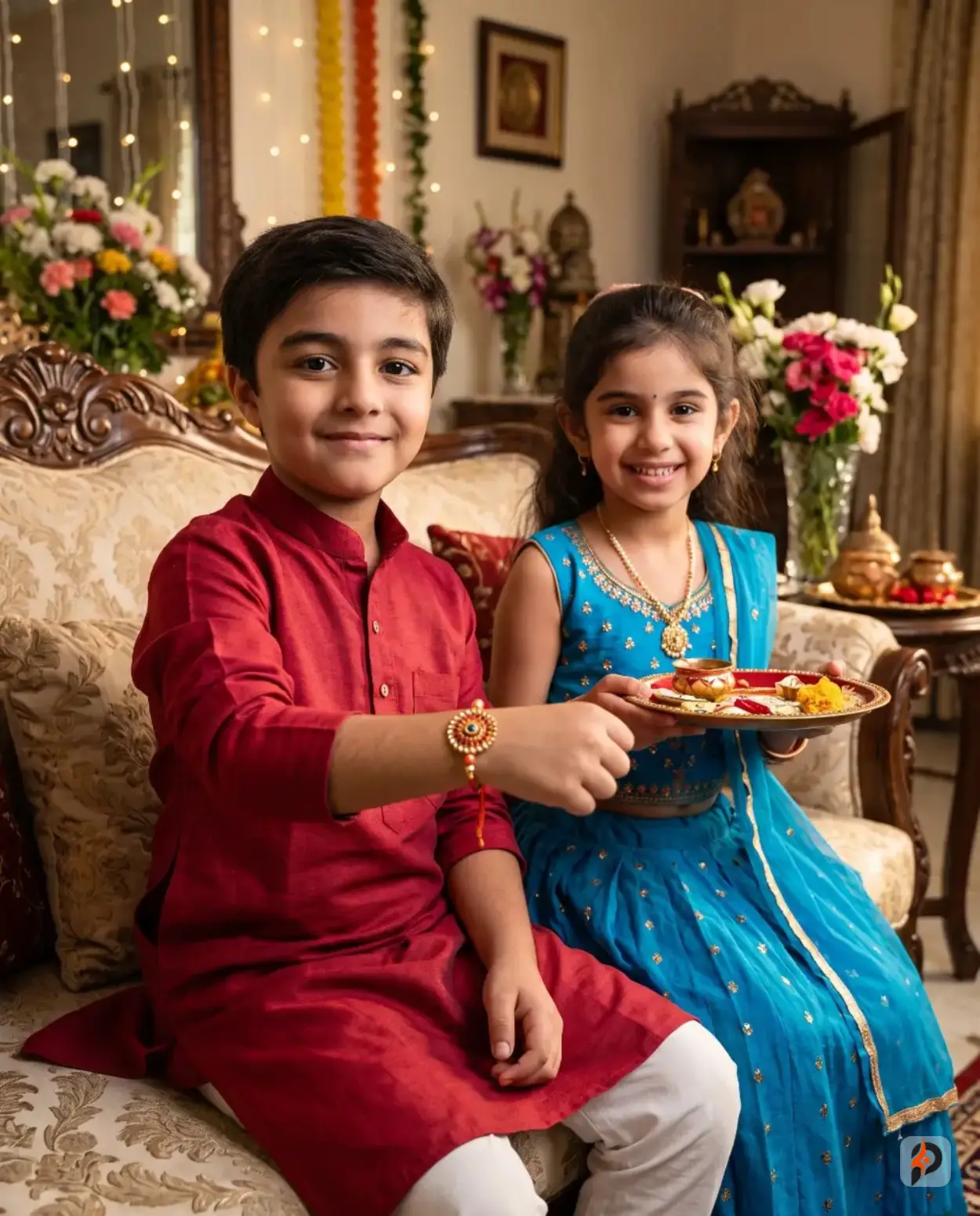
Sometimes you want the image to feel elevated. Not a candid snapshot — a proper portrait. Cinematic lighting. 85mm lens aesthetic. Both siblings clearly dressed in their best traditional wear, looking into the camera with the kind of confidence that says this moment matters.
👉 Indian Sibling Portrait Celebrating Raksha Bandhan Festival in Traditional Attire
The crimson-red kurta and royal-blue Anarkali combination in this prompt was chosen for maximum visual contrast and cultural richness. The 85mm prime lens aesthetic (shallow depth of field, luxurious bokeh, precise facial focus) gives this the quality of a professional editorial portrait. The Rakhi wrist detail prominently in the foreground was a key compositional decision — it anchors the entire festive context visually.
5. The Rakhi Tying Close-Up — The Sacred Moment
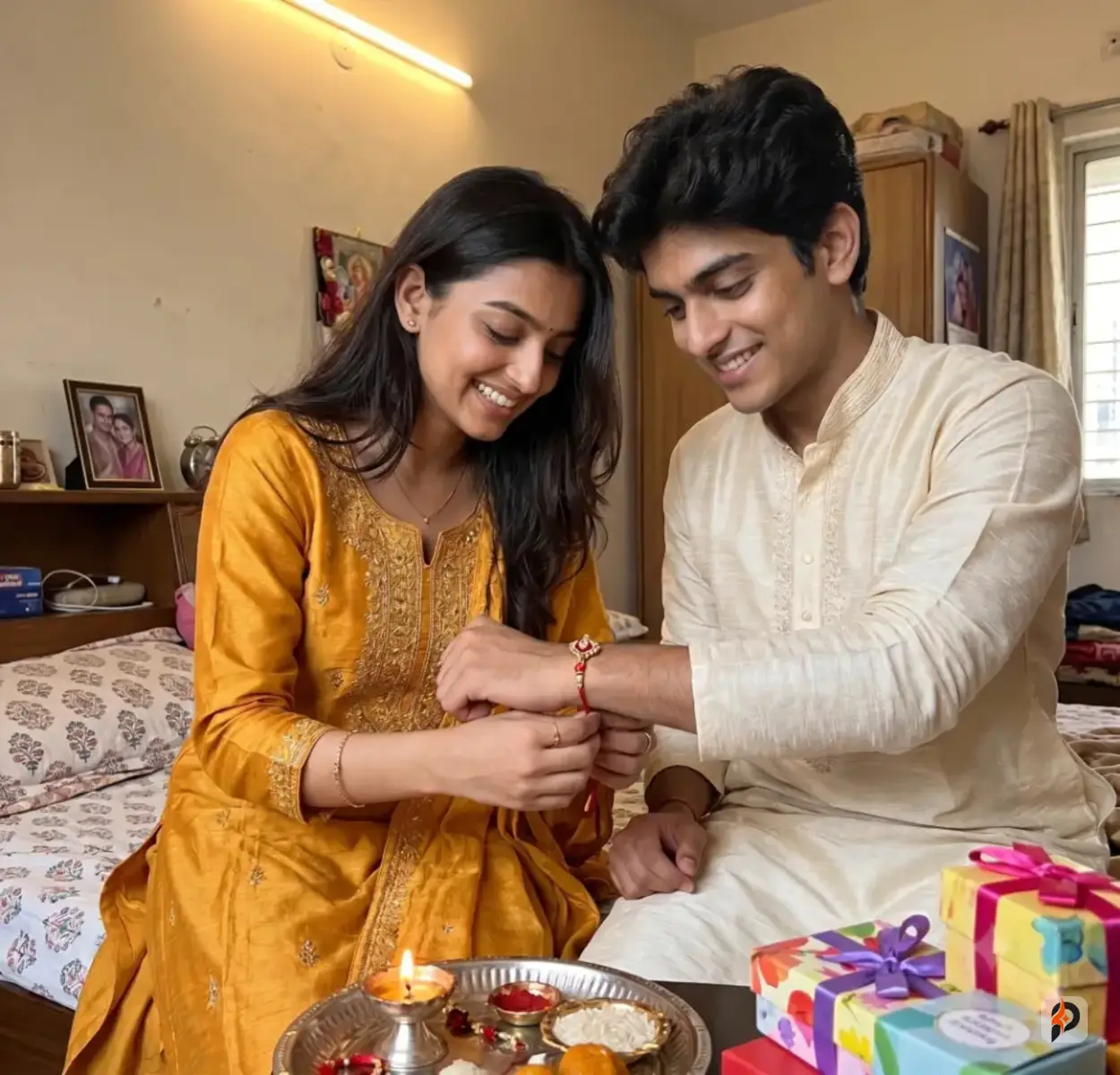
If there's one image that defines Raksha Bandhan, it's this: a sister's hands carefully tying a rakhi around her brother's wrist. Both looking at the hands. Genuine, unposed smiles. A traditional puja thali nearby.
This is the frame people send to their parents in family WhatsApp groups. This is the image that makes someone's grandmother tear up.
👉 Candid Photo of Indian Sister Tying Rakhi on Brother's Wrist
Writing this prompt was the hardest part of the entire project. The challenge: how do you make AI render hands correctly during a precise act like rakhi tying — while also making the faces visible, the expressions genuine, and the lighting warm but not overproduced? The answer was extreme specificity in the prompt — every detail of the lighting angle, the warm 3000–3500K indoor temperature, the puja thali placement, the fabric textures — everything written out explicitly so nothing gets left to chance.
6. The Embrace — After the Rakhi Is Tied
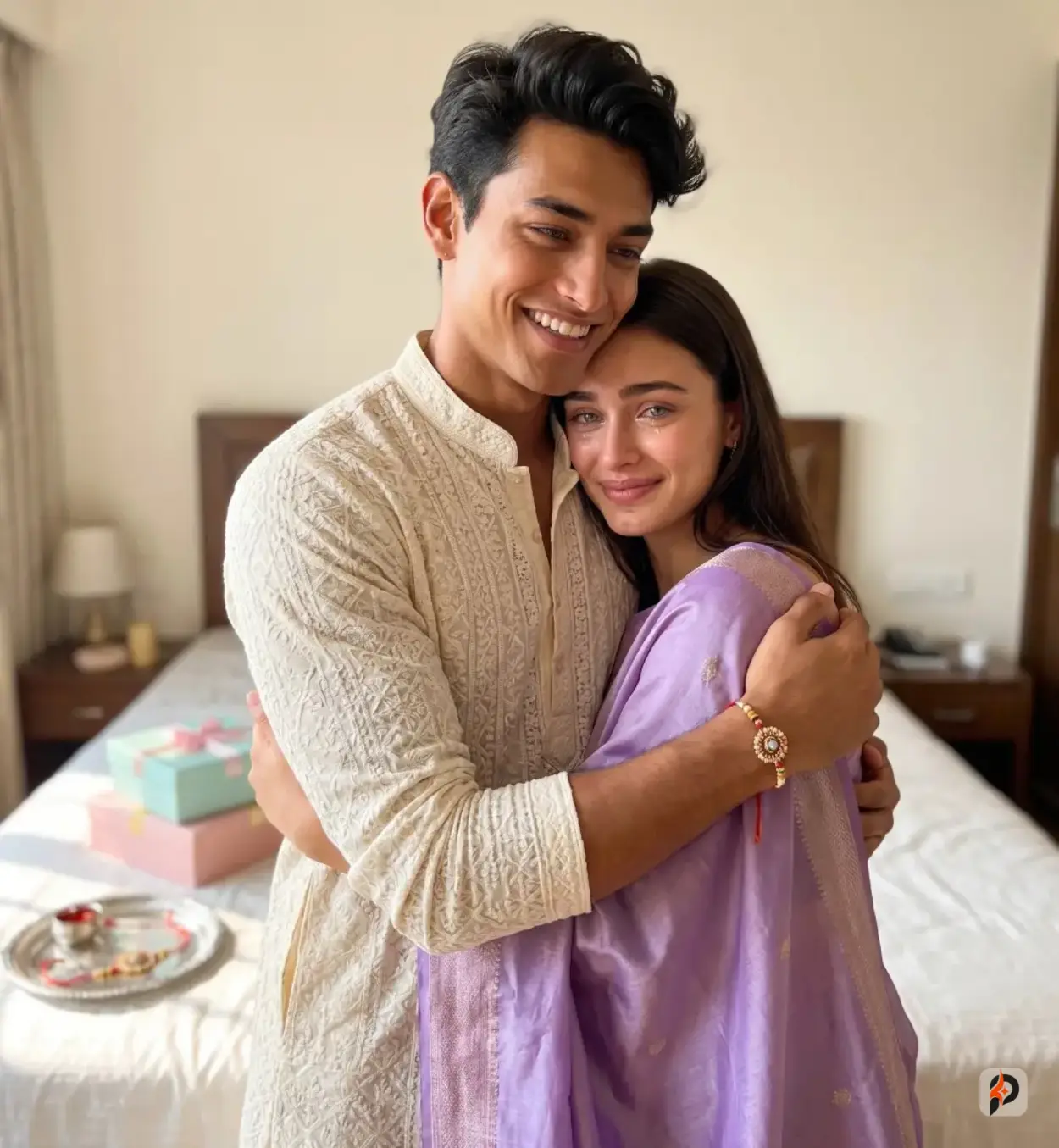
The hug that happens right after the rakhi gets tied is the realest moment of the whole festival. I've seen brothers who didn't cry at anything — not movies, not weddings — go completely silent in that hug. It carries everything.
👉 Candid Smartphone Photo of Indian Siblings Embracing for Raksha Bandhan
The lavender saree and cream chikankari kurta combination here was chosen to create a palette that feels soft, warm, and emotionally resonant — colors that look like memory rather than advertisement. The documentary-style smartphone framing, morning sunlight from a window, and the emotional detail of "glistening eyes" and "subtle tears" were all written to make this feel like something that actually happened, not something staged for a campaign.
7. The Gift Moment — Morning Sunlight and Sister's Hands
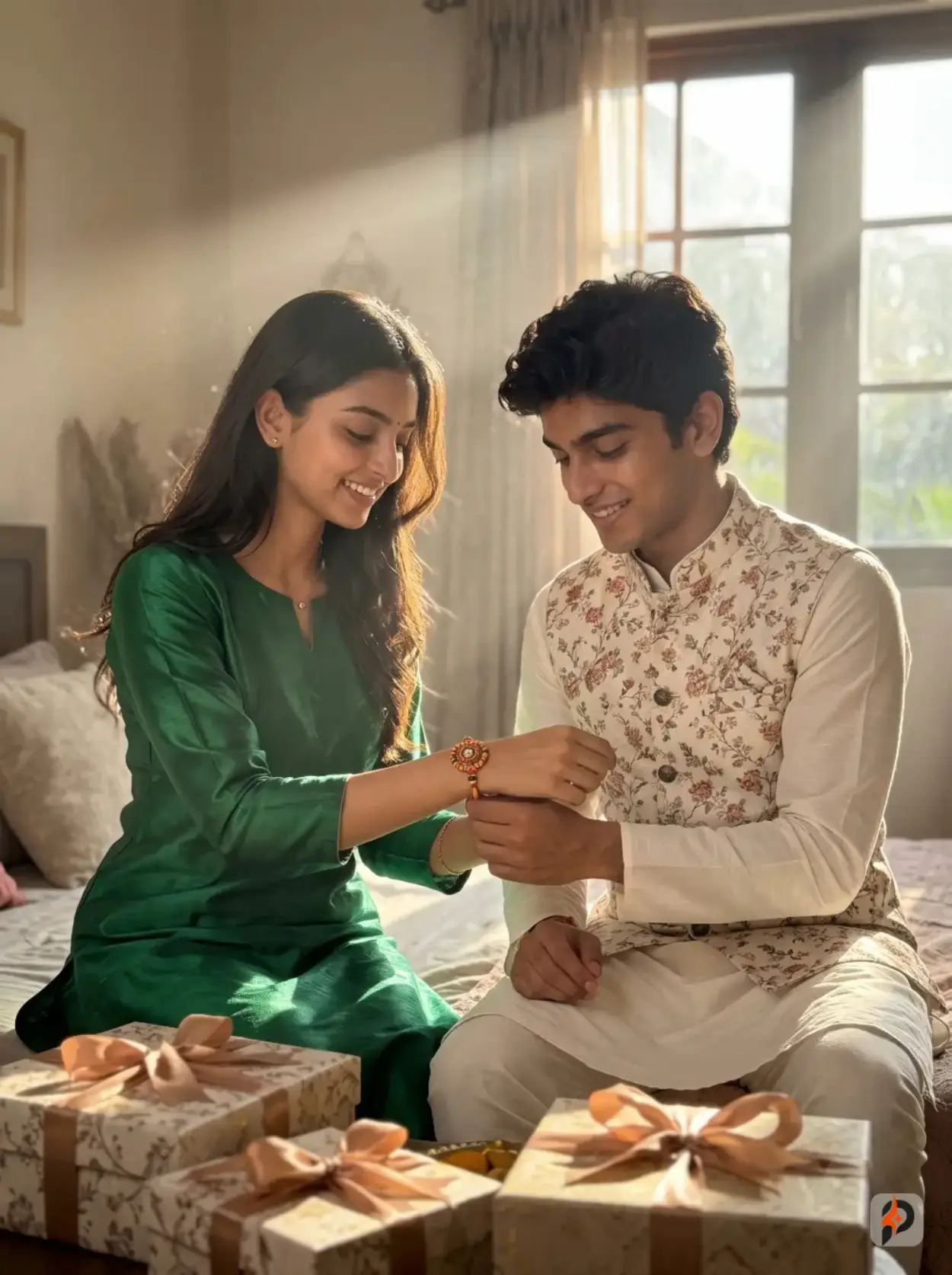
Gifts are a core part of Raksha Bandhan. The sister brings sweets and sometimes a gift; the brother gives a gift in return. The scene of a sister tying rakhi while wrapped gifts sit in the foreground, bathed in morning sunlight, is a visual that every Indian recognizes instantly.
👉 Indian Sister Tying Rakhi on Brother During Raksha Bandhan Festival
This prompt was built around morning sunlight — that specific golden-hour-from-a-window light that only happens between 8 and 10 AM. The volumetric rays, the airborne dust particles visible in the sunbeam, the emerald-green silk kurti against an ivory-white kurta — all of it designed to feel like something you'd want framed on a wall. The premium gift hampers wrapped in decorative paper and satin ribbons in the foreground add context without competing with the central gesture.
8. The Childhood Memory — Nostalgia in a Frame
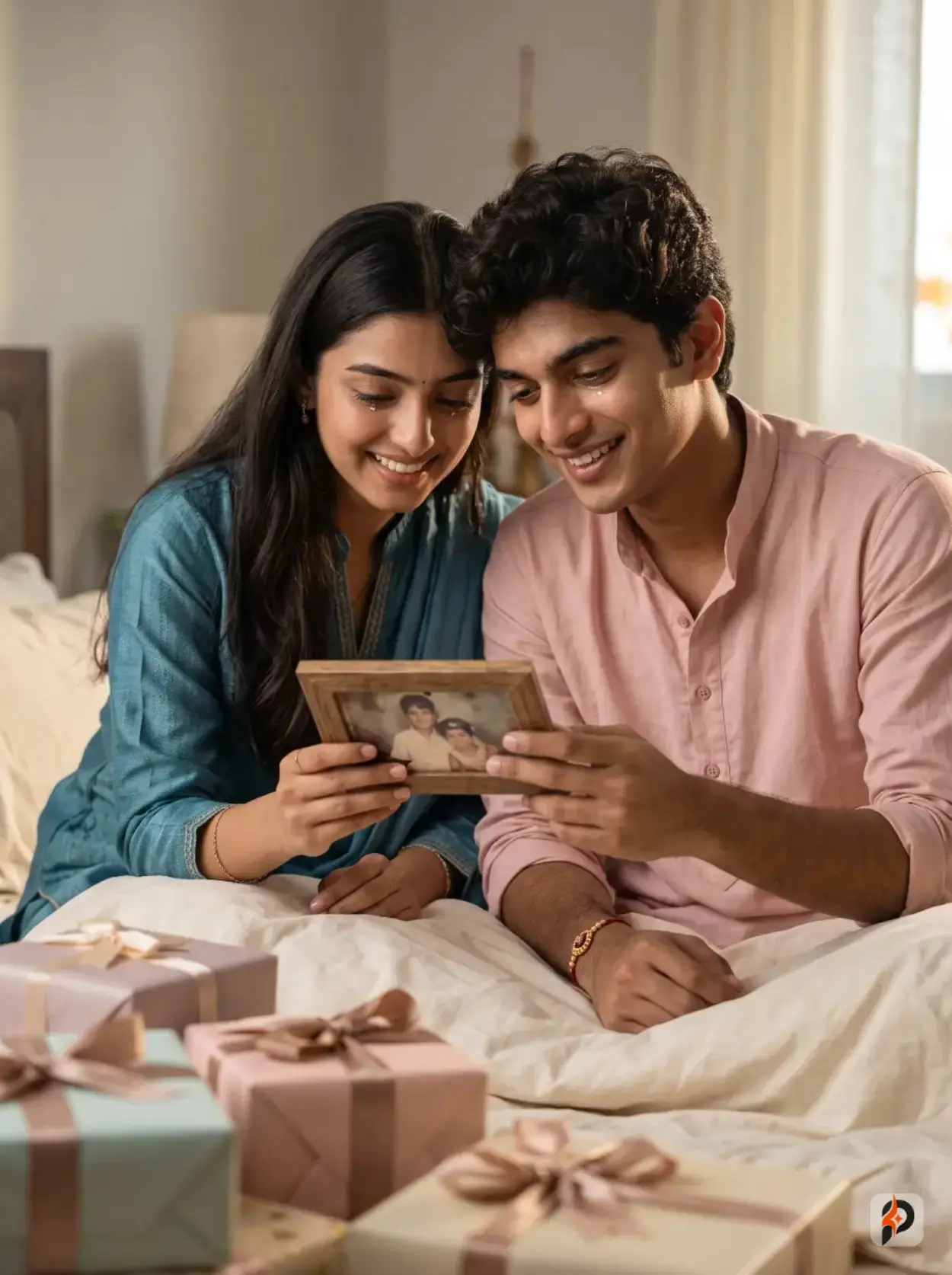
This is the prompt that took me the longest to write, and the one I'm most proud of.
Raksha Bandhan is as much about looking back as it is about the present moment. How many times have siblings ended up holding an old photograph on this day? Laughing at old haircuts. Getting emotional over how young their parents look.
👉 Indian Brother and Sister Looking at Childhood Photo During Raksha Bandhan
The teal-blue and blush-pink clothing combination in this prompt was specifically chosen because those colors feel nostalgic and soft — they match the emotional register of looking at old memories. The "subtle glistening tears along the lower eyelids" and the "bittersweet, celebratory" mood instruction were written to make sure the AI renders emotion correctly — not dramatically crying, not artificially smiling, but that specific in-between state where you're happy and sad at the same time.
9. The Blessing — Sister Touching Brother's Feet
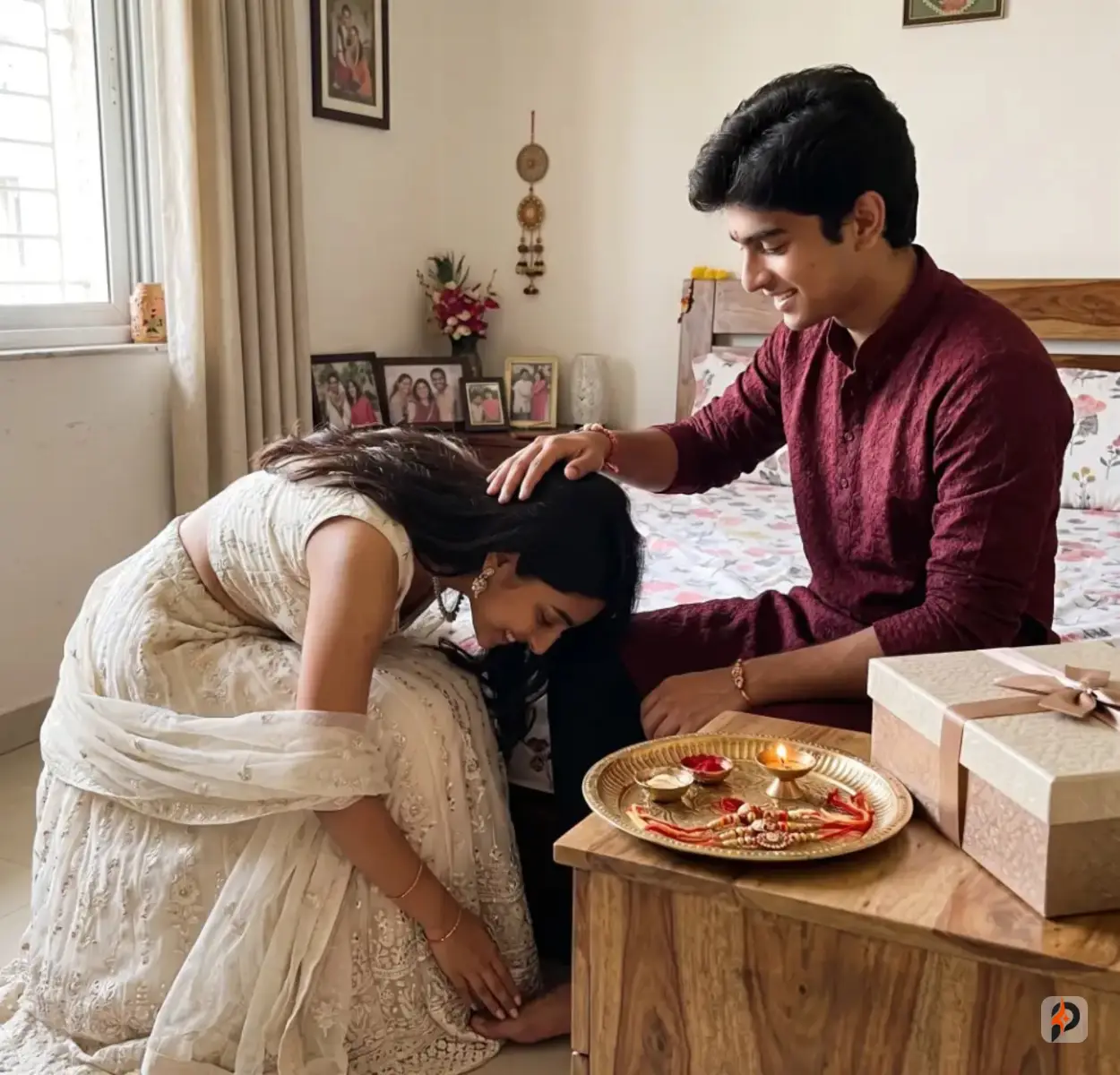
This is the moment that surprises people outside India. At some point in the ceremony, a sister may bow and touch her brother's feet to seek his blessings. It's a deeply traditional gesture of reverence and love — one that speaks to the sacred, protective nature of the sibling bond in Indian culture.
👉 Indian Sister Touching Brother's Feet for Blessing During Raksha Bandhan
Writing this prompt required extreme sensitivity. The gesture is intimate and traditionally significant — it needed to look sincere, not theatrical. The brother's hand resting gently on the sister's head (the blessing response), the off-white lehenga, the deep maroon kurta, the brass puja thali — every detail was chosen to honor the ritual exactly as it happens in real homes.
10. The Playful Fight — Because Siblings Are Also This
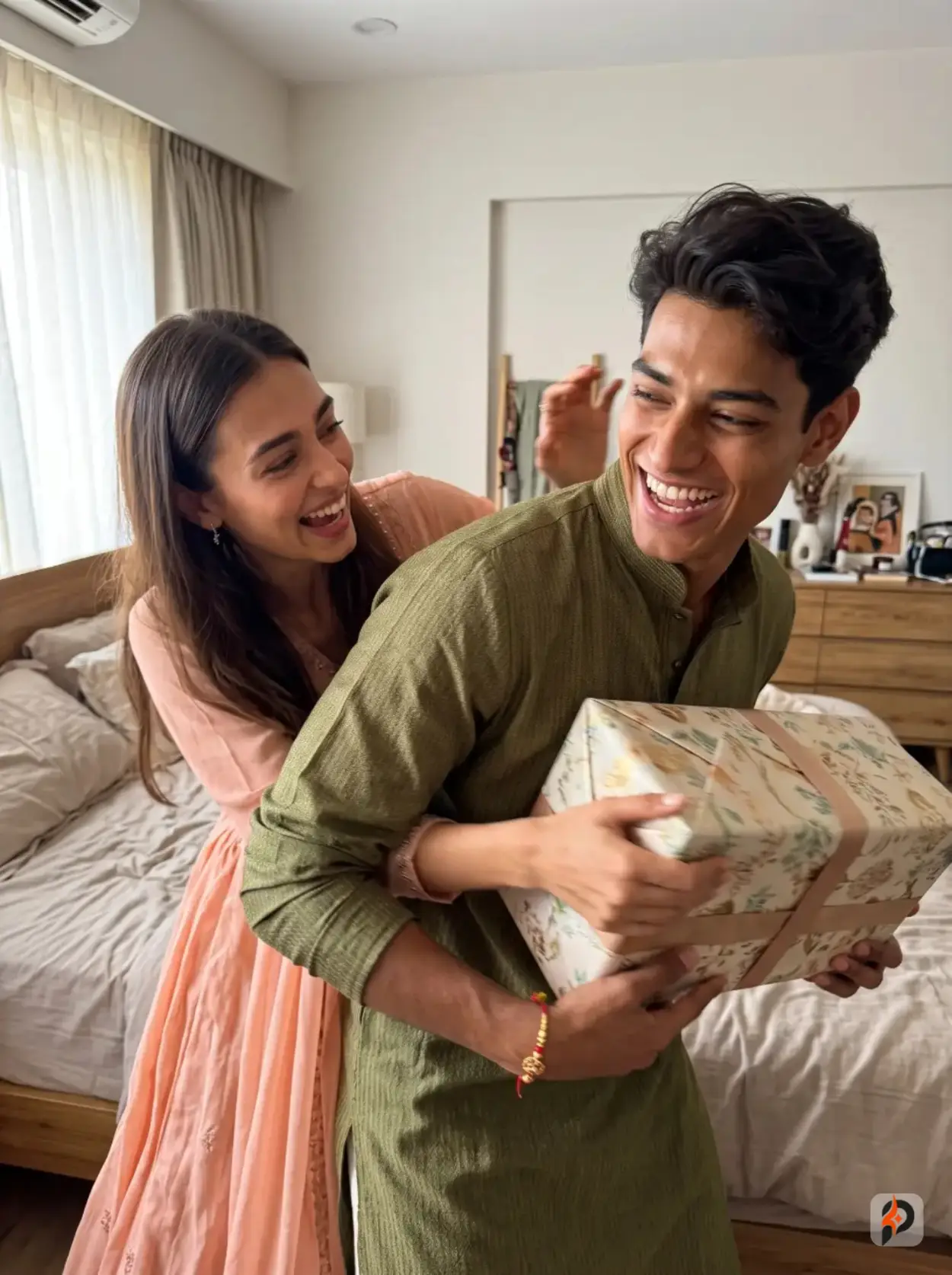
After all the rituals, there's almost always a moment of pure chaos. A brother hiding a gift behind his back. A sister leaning forward trying to grab it, laughing uncontrollably. The kind of picture that ends up in a family group chat with the caption "some things never change."
👉 Indian Brother and Sister Playfully Fighting Over Raksha Bandhan Gift
The olive-green kurta and peach-toned lehenga work perfectly here because they're vibrant and playful without being too formal. The controlled motion blur on the hands (to show movement and energy) while keeping the faces crisp and emotionally legible was technically one of the most interesting challenges to prompt for — it requires very precise language about capturing the "decisive moment" of the image, borrowing from documentary photography vocabulary to tell the AI exactly what kind of spontaneity to render.
How to Use These Prompts for Your Raksha Bandhan Content
Each prompt on Promzio is ready to copy and use directly in your preferred AI image generation tool. Here's a quick workflow:
Go to the prompt page (links above for each scene)
Click "Copy Prompt" to copy the full detailed text
Paste it into your AI tool — ChatGPT, Gemini, or any image generation model you use
Generate your image and download it at full quality
Use it for social media posts, Raksha Bandhan greetings, marketing materials, or personal memory-keeping
And here's something worth knowing: all Raksha Bandhan prompts on Promzio are completely free to access and copy. No sign-up required, no paywall, no hidden steps. Just click, copy, and create.
👉 Browse all free Raksha Bandhan prompts on Promzio →
One click on that link and you'll find every Raksha Bandhan prompt in one place — all 10 scenes covered in this article, plus any new ones added to the collection. Bookmark it if you create festive content regularly.
You can also explore related collections by tag:
👉 All #indian-festival prompts
What Makes a Good Raksha Bandhan AI Prompt
After three months of writing these prompts, here are the actual lessons — not generic advice, but what I specifically learned from getting this wrong multiple times before getting it right:
Specify the light source, not just the mood. "Warm lighting" gives you nothing. "Soft diffused natural window light entering from the upper left, 4300–4800K color temperature" gives you an image.
Name the emotional register exactly. "Happy" is not a direction. "Genuine, unposed happiness — the kind of smile that appears because something is actually funny, not because someone said smile" — that gives the model something to work with.
Describe what you DON'T want as much as what you do. Every prompt I wrote ends with explicit negatives: no plastic skin, no exaggerated bokeh, no artificial glamour retouching. This prevents the model from defaulting to its most generic interpretation.
Ground the image in a physical moment, not a concept. "Raksha Bandhan celebration" is too abstract. "The exact instant a rakhi thread is being secured around a wrist, both faces visible, attention directed at the hands" — this is a scene with physical specificity, and AI handles physical specificity far better than emotional concepts.
Frequently Asked Questions
What is Raksha Bandhan and when is it celebrated in 2026?
Can I use these Raksha Bandhan AI prompts on any AI image generator?
What traditional items are used during the Raksha Bandhan ceremony?
What should I wear for Raksha Bandhan — for brothers and sisters?
How do I get the best results from Raksha Bandhan AI image prompts?
Are there prompts on Promzio for other Indian festivals besides Raksha Bandhan?

Promzio Team
AI Prompt Specialists & Curators
Promzio is built and maintained by Jay, a web developer (BCS, MCA) with hands-on experience using AI tools in real projects and workflows. After spending countless hours searching for reliable, ready-to-use AI prompts and facing the same struggles many creators do, Jay set out to build a solution — alongside a dedicated team of 4 — to make that process easier for everyone.
Promzio was created to solve a problem we personally faced: wasting time searching for good prompts instead of creating. Every prompt on this site is tested, organized, and shared with the goal of helping creators, marketers, and AI enthusiasts save time and create better content, faster.