Beginner
Can You Legally Sell AI-Generated Images in 2026? Copyright, Licensing & Commercial Rules
Can you legally sell AI-generated images in 2026? Discover what US copyright law, Midjourney, DALL-E 3, Adobe Firefly, and Etsy terms actually say about selling AI art commercially, and how to protect your creative work.
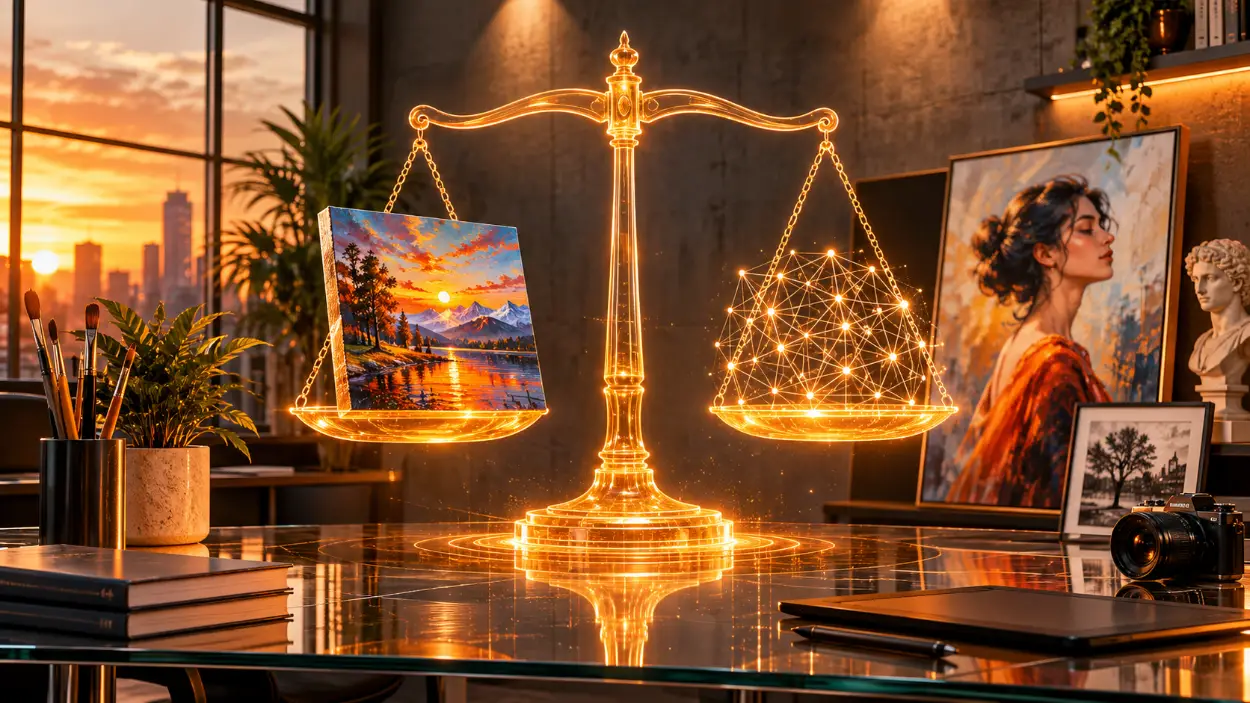
Short Answer: Yes — you can legally sell AI-generated images in 2026, but there are important rules you must follow. You need the right subscription plan, you must respect your AI tool's terms of service, and you should know that without significant human editing, you likely cannot copyright the raw output. Read on for everything you need to know.
Introduction: The Question Every AI Creator Is Asking
You spent an hour crafting the perfect prompt. You generated a stunning image — maybe a fantasy landscape, a product mockup, or an eye-catching poster design. Now you want to sell it on Etsy, Redbubble, or as a digital download. But a nagging thought stops you: Is this even legal?
You are not alone. Selling AI generated images legally is one of the most searched questions among beginners and experienced creators in 2026. The law around AI art is evolving fast, platforms keep updating their policies, and the rules are genuinely confusing. Get it wrong, and you could face account bans, DMCA takedowns, or worse — a legal dispute you never saw coming.
This guide breaks everything down in plain language. We will cover US copyright law, the commercial terms of the most popular AI image tools (Midjourney, DALL-E 3/ChatGPT, Adobe Firefly, FLUX, and Stable Diffusion), where you can sell, what you cannot do, and how to protect your work as much as the law currently allows.
Is It Legal to Sell AI-Generated Images? (The Direct Answer)
Yes, selling AI-generated images is legal in the United States and most countries in 2026. There is no law that bans the commercial sale of AI art. However, "legal to sell" does not automatically mean "fully protected." You need to satisfy three conditions:
Your AI tool's terms of service must allow commercial use — this usually means a paid subscription.
The image must not infringe on existing copyrights or trademarks — no generating Disney characters, famous logos, or celebrity likenesses.
You must understand that pure AI outputs usually cannot be copyrighted by you — meaning others can legally copy them unless you add substantial human creative work.
If those three conditions are met, you are free to sell. Let us dig deeper into each one.
Part 1: What US Copyright Law Says About AI Images in 2026
The Human Authorship Rule
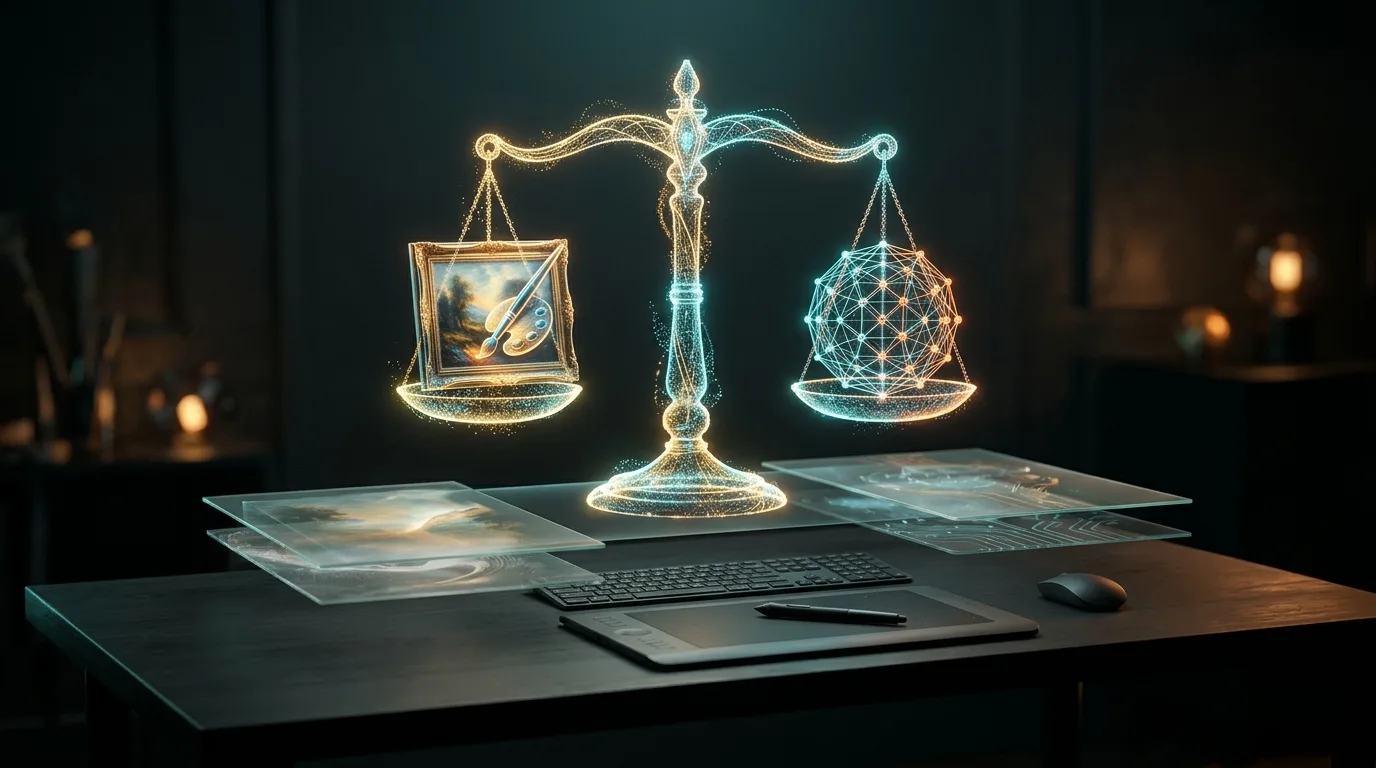
The U.S. Copyright Office released its landmark AI and Copyright Policy Report (Part 2) in January 2025, and the position is crystal clear: human authorship is a required baseline for copyright protection.
This means:
A purely AI-generated image — created by typing a prompt and clicking "Generate" — cannot be copyrighted by the person who typed the prompt.
The reasoning: writing a text prompt does not give you precise control over the final creative expression the AI produces. The AI makes the expressive choices. Machines cannot hold copyrights.
Raw AI outputs essentially exist in a legal grey zone close to the public domain — which means, technically, anyone could copy and resell your unedited AI image without violating copyright law.
The U.S. Copyright Office's official AI policy page is the authoritative source for this. It is updated regularly as new cases and policy decisions emerge, and it is worth bookmarking if you sell AI art.
When Can You Get Copyright Protection?
You can protect AI-assisted work if a human being contributed substantial creative decisions:
Heavy editing and manual modification: If you take an AI-generated image into Photoshop, repaint large sections, add original hand-drawn elements, or significantly composite it with other assets — the human-authored portions can be registered for copyright.
Compilation and curation: If you arrange a collection of AI images into a magazine layout, graphic novel, or designed template — the selection, arrangement, and creative layout can be copyrighted, even if the individual raw images cannot.
AI as a tool, not the creator: Professionals who use AI the same way they use a camera or a paintbrush — making deliberate choices at every step of the creative process — have a stronger argument for copyright over the final work.
What Prompt Engineering Alone Cannot Do
Many creators believe that because they spent hours writing detailed, multi-paragraph prompts, they have creative ownership. The Copyright Office has addressed this directly. A very long or technical prompt does not equal authorship of the output, because:
The same prompt can produce wildly different images each time.
The user cannot control the final pixel-by-pixel expressive output.
The AI's "choices" — lighting, composition, texture, color — are made by the model, not the human.
This is one of the most important things to understand before selling AI generated images legally. You can sell the image without owning the copyright, but you cannot stop someone else from using the exact same image without copyright protection.
Part 2: Commercial License Rules by AI Tool
Each AI image tool has its own Terms of Service (ToS). Violating them can get your account banned and may create legal exposure. Here is a practical breakdown of the biggest platforms:
Midjourney
Midjourney is one of the most popular tools for creating commercial AI art. Its commercial terms work like this:
Paid subscribers get commercial rights. If you are on any paid plan (Basic, Standard, Pro, or Mega), you can sell images you generate — on products, as digital downloads, for clients, on merchandise, etc.
Free trials have NO commercial rights. Images from free-tier access cannot be used commercially.
The $1 million rule. If your company or organization earns more than $1,000,000 USD per year in gross revenue, you must be on a Pro or Mega plan to use Midjourney images commercially. Lower-tier plans are not sufficient above that threshold.
Stealth Mode matters. On Basic and Standard plans, your images are public in Midjourney's community gallery by default. To keep client work confidential, you need a Pro or Mega plan that includes Stealth Mode.
Midjourney gets a license too. Even as a paid subscriber, Midjourney's ToS grants them a perpetual worldwide license to use your prompts and generated images to operate and improve their platform.
DALL-E 3 / ChatGPT (OpenAI)
Paid plans grant commercial rights. ChatGPT Plus, Team, Enterprise, and API users can sell and commercially use images generated by DALL-E 3.
OpenAI assigns its rights to you. Unlike some platforms, OpenAI contractually transfers its ownership interest in the outputs to the user on paid plans.
No legal indemnification. If a third party claims your image infringes their copyright, OpenAI will not defend you legally. You are responsible.
Content policy applies. You cannot generate or sell images depicting real people without consent, copyrighted characters, or harmful content. Violations result in account termination.
Adobe Firefly
Adobe Firefly is widely considered the safest tool for commercial AI image selling because:
Trained on licensed content. Firefly is trained on Adobe Stock images, openly licensed content, and public domain works — not scraped internet data. This greatly reduces the risk of generating something that infringes on a living artist's style.
Enterprise IP indemnification. Adobe offers intellectual property indemnification for qualifying enterprise customers. If a legal claim arises from a Firefly-generated image used under an eligible plan, Adobe provides legal backing. No other major AI image tool offers this.
Ideal for agencies and professional commercial work where legal risk tolerance is low.
FLUX (Black Forest Labs)
FLUX is a newer but rapidly growing player, popular for its extremely high realism:
Via official API / hosted platforms: Full commercial rights are included in the usage terms.
Open-weights models (FLUX [schnell] / klein variants): Some versions use permissive Apache 2.0 or MIT licenses that allow free commercial self-hosting.
FLUX [dev] variants: The default license is non-commercial only. To self-host and sell commercially, you must purchase a paid commercial license from Black Forest Labs.
Synthetic data restriction: Using FLUX outputs to train competing AI models requires a separate Synthetic Data License regardless of your plan.
Stable Diffusion (Stability AI)
Stable Diffusion's open-source nature makes it flexible but also places full legal responsibility on the user:
Community License (under $1M revenue): Commercial use is generally permitted for organizations earning under $1 million per year annually, often requiring registration.
Enterprise License: Required if annual revenue exceeds $1 million.
Self-hosted = self-responsible. Because many users run Stable Diffusion locally, Stability AI does not offer any indemnification. If your outputs infringe anything, it is entirely your problem.
The Stability AI Use Policy is publicly available and updated regularly — always check it before a commercial project.
AI Tool Commercial Rights — Quick Comparison
AI Tool | Commercial Rights | Free Tier | Copyright Indemnification | Revenue Cap |
|---|---|---|---|---|
Midjourney | Yes (Paid plans) | No | No | $1M (must upgrade plan) |
DALL-E 3 / ChatGPT | Yes (Paid plans) | No | No | None |
Adobe Firefly | Yes (All paid plans) | Limited | Yes (Enterprise) | None |
FLUX (API / [schnell]) | Yes | No | No | None |
FLUX [dev] (self-hosted) | Paid license needed | No | No | None |
Stable Diffusion | Yes (Under $1M) | Yes (non-commercial) | No | $1M threshold |
Part 3: Where Can You Actually Sell AI-Generated Images?
Etsy
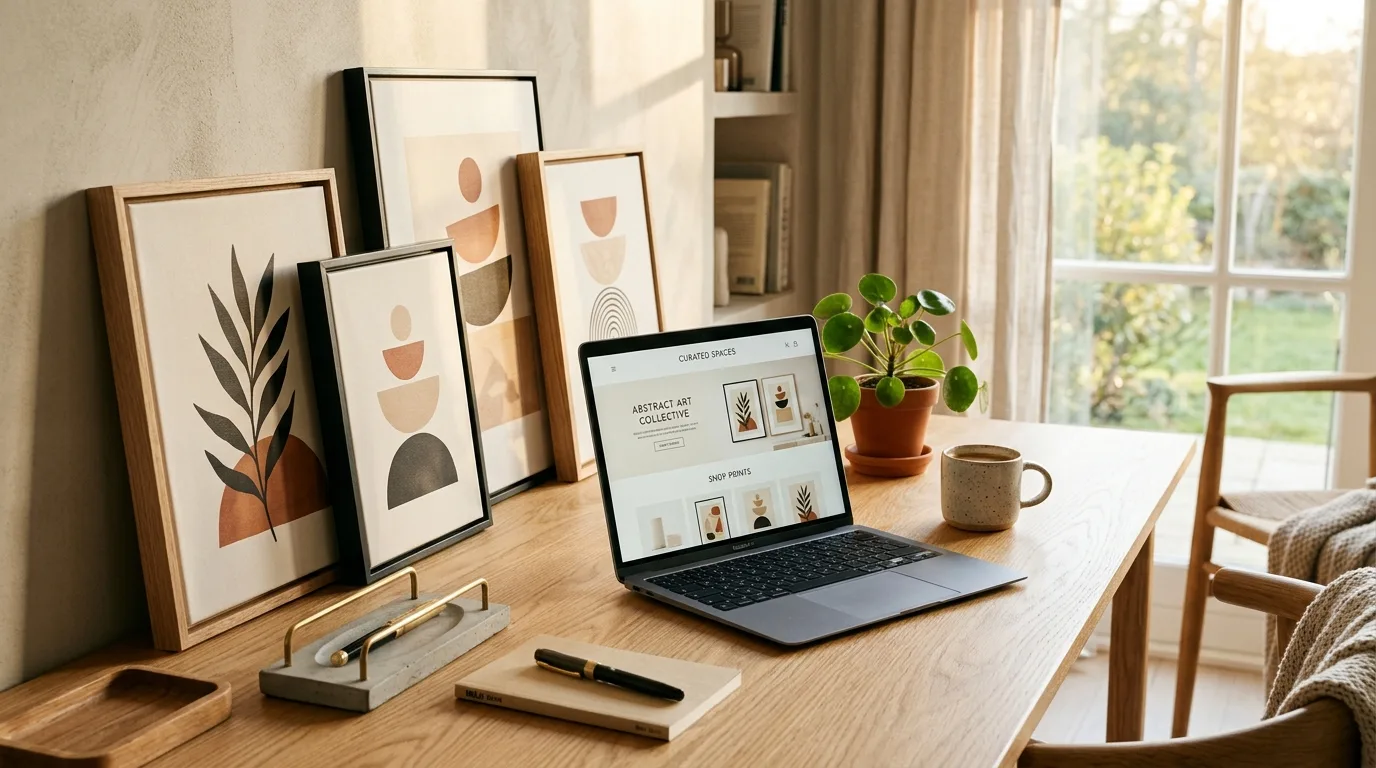
Etsy allows AI-generated art as of 2026, but with conditions:
You must disclose in your listing that the item is AI-generated.
You can sell digital downloads, prints, or AI-assisted designs.
You cannot use AI-generated images as fake product photos for physical goods if no actual physical product exists.
Selling raw prompts alone is restricted.
Risk to know: Without copyright on a pure AI image, if someone screenshots your Etsy listing and resells it cheaper, you have very limited legal recourse.
Redbubble
Redbubble allows AI art under its general terms:
You must hold all necessary rights to what you upload (which means complying with your AI tool's ToS and having a paid plan that grants commercial rights).
Strictly no trademarked characters, logos, celebrity likenesses, or copyrighted IP — AI-generated or otherwise.
Heavily edited, unique AI work performs far better and faces fewer quality enforcement flags.
Shutterstock
Shutterstock has a strict ban on contributors uploading AI-generated content to its marketplace. They cannot verify copyright ownership chains on AI outputs. If you want to sell stock images, look at Adobe Stock instead — they do accept AI images if clearly labeled.
Other Platforms
Gumroad / Payhip / Your own website: Full control. You set the rules. Best for digital products and prompt packs.
Zazzle / Society6: Allow print-on-demand with AI art; similar disclosure expectations as Etsy and Redbubble.
NFT Marketplaces: Legally murky. Copyright issues compound significantly in the NFT space. Seek legal advice before minting AI-generated NFTs for commercial sale.
Part 4: What You Legally Cannot Do When Selling AI Images
Even though selling AI generated images legally is possible, there are clear lines you must not cross:
1. Do Not Generate Copyrighted Characters or IP
Generating Spiderman, Mickey Mouse, a specific anime character, or any recognizable copyrighted IP and selling it is trademark and copyright infringement — regardless of whether AI made it. The method of creation does not eliminate IP law.
2. Do Not Use Style Prompts of Living Artists
Prompting "in the style of [specific living artist's name]" and selling the result creates serious legal risk. While "style" itself is not copyrightable, courts have begun examining whether AI outputs that closely mimic a living artist's distinctive expression go too far. Avoid it for commercial use.
3. Do Not Generate and Sell Celebrity Likenesses
Using AI to generate a realistic image that looks like a specific celebrity and selling merchandise with it violates right of publicity laws in many US states. This is separate from copyright law and carries its own legal penalties.
4. Do Not Generate on a Free Tier and Sell
Using a free trial or a non-commercial license and selling the images is a direct violation of the AI tool's Terms of Service and can result in immediate account termination, DMCA notices, and potential legal liability.
5. Do Not Claim Copyright You Do Not Have
Do not put © marks on raw AI outputs and claim full copyright ownership. It is misleading to buyers and could expose you to fraud claims if buyers rely on that false copyright claim.
Part 5: How to Protect Your AI Art Work (Even Without Full Copyright)
Since pure AI outputs lack copyright protection, savvy creators use alternative strategies:
Add Substantial Human Creative Input
This is the most powerful strategy. Take your AI base image and:
Hand-paint or digitally illustrate significant elements over it.
Add custom typography, original design elements, or compositions.
Make creative decisions that go beyond clicking "Generate."
The human-authored additions become copyrightable, and the resulting work is legally stronger.
Use AI as a Starting Layer, Not the Final Product
Think of AI-generated images the way a photographer thinks of a RAW file — it is a starting point, not the finished piece. Photographers cannot prevent others from photographing the same sunset, but their specific creative choices in composition and editing are protected. The same logic applies.
Rely on Trade Dress and Brand Recognition
While you cannot copyright a raw AI image, you can build a recognizable brand style. Consistent visual identity, unique packaging design, and distinctive logo usage around your AI-generated products creates trade dress protection — a different form of IP that does not require copyright.
Watermark and Document Your Process
Keep records of your generation sessions, prompts, editing history, and iteration timestamps. While not legally conclusive, this documentation builds a paper trail that supports your creative contribution if a dispute arises.
Use Contract Law for Client Work
For commercial client projects, draft clear agreements specifying that the client receives a license to use the AI-assisted work, who is responsible for IP indemnification, and what the client can and cannot do with it. Contract law protects you even where copyright law falls short.
Part 6: Practical Tips for Beginners Selling AI Images in 2026
If you are just starting out and want to start selling AI generated images legally without making rookie mistakes:
Step 1 — Choose the right tool and plan. Start with a paid subscription. Adobe Firefly offers the most legal security. Midjourney and ChatGPT Plus are solid for most creators. Never use a free tier for commercial work.
Step 2 — Read the Terms of Service. Spend 20 minutes reading the commercial terms of whatever tool you use. Things change. Midjourney updated its terms multiple times between 2023 and 2026. Check the current version before a major project.
Step 3 — Add your creative touch. Even small amounts of human editing — a custom color grade, an added texture, a composed background — strengthen both the quality and the legal standing of your work.
Step 4 — Disclose AI use on marketplaces. Platforms like Etsy require it. Buyers increasingly appreciate transparency. It builds trust rather than damaging sales.
Step 5 — Do not use AI to replicate anyone's protected work. Avoid prompting trademarked characters, celebrity faces, or famous artist styles. The creative field is wide open without going near protected territory.
Step 6 — Explore high-demand niches. Product mockups, social media templates, fantasy art, poster and wallpaper designs, and realistic AI photos are among the most commercially viable categories right now. Promzio's free prompt library gives you tested, ready-to-use prompts across all of these categories — saving you time on trial and error.
Step 7 — Stay updated. AI copyright law is one of the fastest-moving areas of legal policy in 2026. Check copyright.gov/ai periodically for new rulings and guidance.
Real-World Example: What a Beginner's Workflow Looks Like
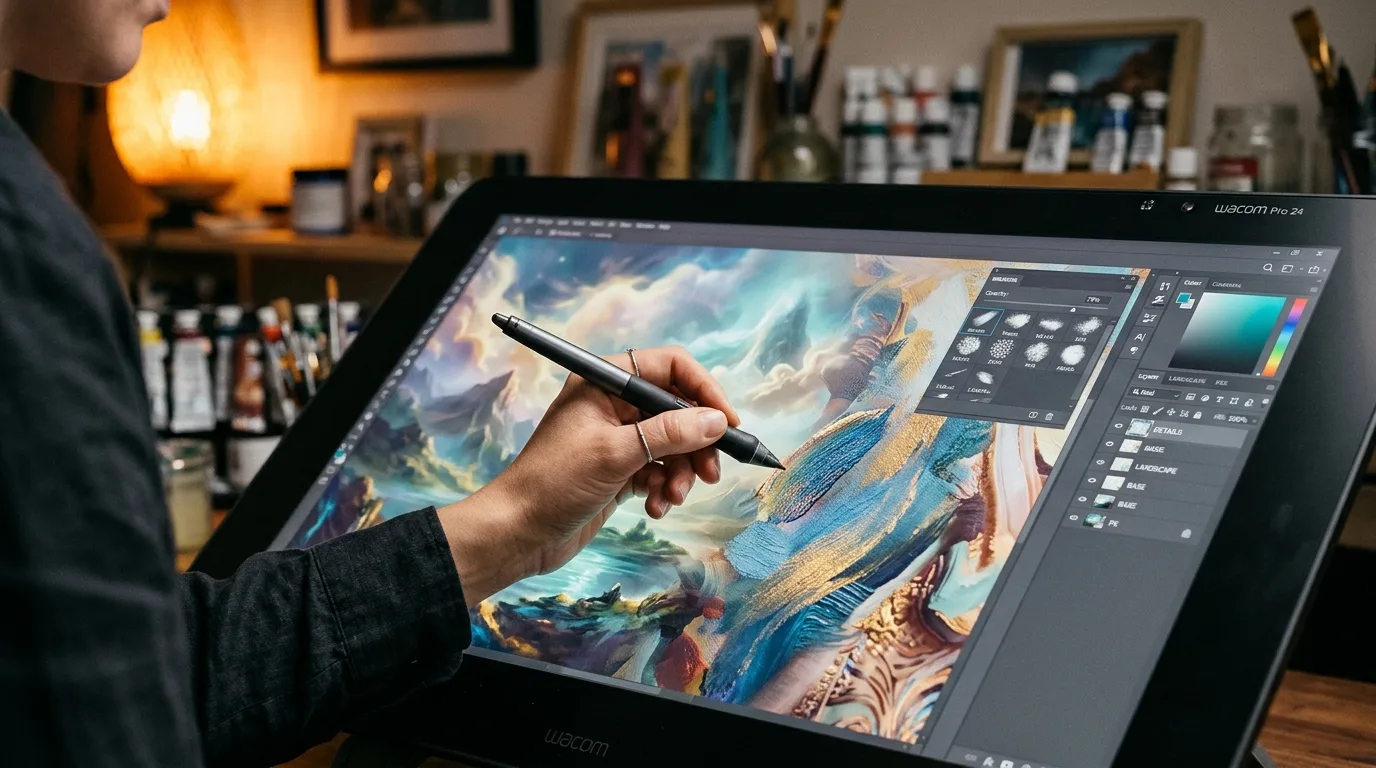
Meet Priya — a graphic designer who started selling AI-generated poster art on Etsy in early 2026.
She subscribed to a paid ChatGPT Plus plan and used DALL-E 3 to generate base fantasy landscapes. But instead of selling the raw outputs, she spent 30-45 minutes per piece in Adobe Photoshop — adjusting colors, adding hand-drawn border elements, compositing original textures, and placing custom typography she designed herself.
Because of those additions, her final artwork had substantial human authorship layered over the AI base. She filed copyright registrations for her overall designs and disclosed AI use in her Etsy listings. Within three months, she had 40+ sales and a growing catalog of work that competitors could not simply copy and undercut.
The lesson: the AI does the heavy lifting on the visual foundation, but human creative decisions are what make the work legally protectable and commercially unique.
Where to Find Ready-to-Use Prompts for Commercial AI Images
Before you can sell great AI art, you need prompts that actually produce great results. Writing prompts from scratch is a skill that takes time to develop — but you do not have to start from zero.
Promzio is a free AI prompt library with 495+ hand-tested, ready-to-use prompts across the most commercially popular categories:
Realistic Photos prompts — for lifestyle imagery, portraits, and editorial-style shots
Posters & Wallpapers prompts — for print-on-demand and digital downloads
Product Photos prompts — for e-commerce mockups and listings
Anime & Art prompts — for fan art styles and digital collectibles (always avoid protected IP)
Logos & Icons prompts — for branding and client projects
If you want to go deeper, Promzio's Prompt Builder lets you customize parameters and build your own professional-grade prompts. The Beginner's Guide to AI Image Generation is also a great next read once you have finished this post.
Conclusion: Your Action Plan for Selling AI Images Legally in 2026
Selling AI generated images legally in 2026 is absolutely possible — and it is a real income opportunity for creative individuals. But it requires doing things the right way.
Here is your simple action plan:
Get a paid plan on whichever AI tool you use — free tiers do not grant commercial rights.
Read and follow the ToS of your specific AI tool before selling anything.
Understand the copyright reality: you cannot copyright a raw AI output, but you can copyright the human-authored additions you make to it.
Avoid protected IP — no trademarked characters, no celebrity likenesses, no living artist style replication for commercial sale.
Disclose AI use on any marketplace that requires it (most do now).
Add your own creative touch to every piece you sell — it improves both quality and legal standing.
Bookmark copyright.gov/ai and check back regularly as the law continues to develop.
The AI art market is growing fast. The creators who succeed long-term will be those who treat it as a genuine creative practice — using AI as a powerful tool, not a replacement for thinking, skill, and originality.
Ready to start creating? Browse Promzio's free library of AI image prompts and find the perfect starting point for your next commercial project.
This blog post was written for informational and educational purposes. It does not constitute legal advice. For specific legal questions about your commercial use of AI-generated images, consult a qualified intellectual property attorney.
Frequently Asked Questions
Can I legally sell AI-generated images in 2026?
Do I own the copyright to AI-generated images I create?
Which AI tool is best for selling AI-generated images legally?
Can I sell AI-generated images on Etsy or Redbubble?
What happens if someone copies and sells my AI-generated image?
Is it legal to use prompts based on a famous artist's style for commercial AI images?
Do I need to disclose that an image is AI-generated when selling it?
Ananya Sharma
Creative Director & Stylized AI Art Curator
Digital illustrator and art director based in Bengaluru. Expert in anime aesthetics, dark fantasy worldbuilding, and concept art prompts for games and publishing.